
Michigan’s nearly 3,300 miles of shoreline are home to roughly 275,000 acres of sand dunes. These coastal sand dunes have been formed by the wind over thousands of years. They play an important role in the ecosystem of the coast as well as the environmental diversity of the nation. The Great Lakes sand dunes are home to many plants and animals not found anywhere else.
Dunes are naturally dynamic, which means that their sands shift in response to storms, waves, and winds. However, this ability to shift and adapt makes the dunes even easier targets for the forces of erosion. Invasive species and human activity, including tourism, sand mining, and land development, can accelerate natural erosion and quickly devastate the coastal environment.
The sand dunes in the Great Lakes State are the largest collection of freshwater sand dunes in the world. Dune restoration protects these natural wonders and stabilizes the coastal environment, restoring both the ecological and economic value of the dunes. At Superior Groundcover, our sand delivery and installation services play a vital role in sand dune restoration.

Erosion can threaten our beaches, homes, businesses, and way of life along the lakeshore. However, it’s important to remember that some amount of erosion is natural. Our Great Lakes dunes are not static; they are a dynamic environment responding to the push and pull of the wind and water.
However, there are certain causes of erosion that go beyond what’s natural. These factors contribute to a rate of erosion that is damaging to the lakes, dunes, coast, and the surrounding area. Such causes include:
Preventing sand dune erosion is always easier than restoring what’s been lost. If you live near a sand dune along the lake, here are two simple ways to protect the coast:
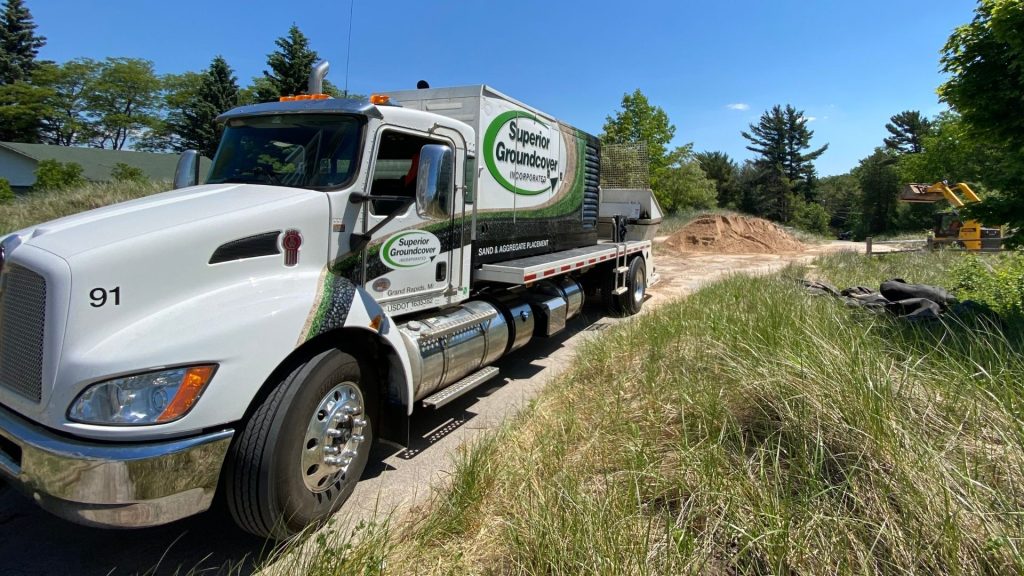
One way to restore our dunes is through beach nourishment. This process adds large amounts of sand back to the beach to minimize the effects of erosion.
At Superior Groundcover, our sand blower trucks allow us to install sand as well as small aggregates for residential and commercial areas throughout Michigan. Our slinger truck fleet is able to install sand, aggregate, and soil up to 80 feet from the truck.
Dune restoration presents its own challenges unique to other kinds of erosion control along the beach. For example, the simple act of bringing trucks and equipment on or near the dune to restore it may damage or destroy the environment and end up doing more harm than good. With our sand blower trucks in particular, we can restore the dune from a safe distance, up to 300–400 feet, and still install the sand with precision.
Dune grass and other vegetation can help stabilize the shoreline. The roots of these plants will absorb rainwater and help stabilize the sand, lessening the effects of erosion. Hydroseed can even be installed in certain areas along the Lake Michigan shoreline.
It’s always best to rely on native plants for coastal dune restoration. However, non-native plants may be used if necessary. Some native plants typically used for dune stabilization in Michigan include:
The ultimate benefit of dune restoration is that it protects and preserves Michigan’s freshwater dunes, a natural marvel not seen in such large quantities anywhere else in the world. Preserving and restoring our dunes not only protects our environment, but it also protects our way of life. If we lose our dunes, we’ll also lose coastal homes and businesses to erosion, and we’ll lose the economic benefit of tourism.
Dune restoration is not without its flaws. Whether you chose beach nourishment or added vegetation, dune restoration can be an expensive process, and the results are only temporary at best. Dune restoration done poorly can kill native species and accelerate erosion even further.
If you have questions about the dune restoration process, our team is here to help. We’ll help you determine which methods of dune restoration will be most effective in your specific case.
Restored sand dunes with native vegetation can help prevent runoff. The plants will absorb rainwater and other precipitation, preventing flooding and runoff.
Sand dunes are a natural force against coastal erosion. They protect the coast against high waves and storms, and they adapt naturally to the wind and water in a way that disperses energy and protects the coastline.
Remember, dunes are dynamic by nature. Even a dune that has been stabilized will shift in response to the wind and the waves. However, sand dune stabilization is an important part of erosion control. Beach nourishment and native plants are two methods we employ to stabilize dunes in Michigan.